
Trace the Former Owners of a Crawford County Property
Every Crawford County title search starts with the current parcel and the newest deed. From there you move grantee to grantor, one transfer at a time. The Register of Deeds reports that complete digital recording started in 2001. The online index reaches, in the office's words, as far back as the 1970s and farther. No exact cutoff year is stated. Historical maps can explain an old description. But they cannot supply a deed chain on their own. That is the difference the era table draws between recorded instruments and map sources.
| Backward step | Grantor to grantee clue | Document check | Next search |
|---|---|---|---|
| Latest transfer | Current owner appears as grantee. | Read the deed image and legal description. | Search the grantor as an earlier grantee. |
| Prior transfer | Earlier owner is named as grantee. | Match tract and recording reference. | Repeat with that deed’s grantor. |
| Older record | Party name or tract may need another form. | Ask about scanned books or microfilm. | Use a historic plat for context only. |
| Source | Years It Covers | Where Held | What It Shows |
|---|---|---|---|
| Online grantor-grantee index | At least the 1970s and farther; exact start not published. | Colortract and Tapestry. | Party and tract entries for recorded instruments. |
| Digital recordings | 2001 forward. | Register of Deeds index and image service. | Digitally recorded documents and images. |
| Pre-2001 paper records | Older years; scanning and indexing continue. | Register of Deeds, with office guidance. | Scanned documents and historic index material. |
| Historic maps and plats | 1828 through 1901–1902 items cataloged. | Wisconsin Historical Society and local archives. | Lot, claim, street, and landowner context. |
Colortract and Tapestry carry the indexed chain, so start there. When a name search stalls, ask the Register of Deeds about paper books, tract cards, historical indices, or microfilm. The Wisconsin Historical Society's maps can help interpret an old lot or street reference. They never replace the recorded instrument itself.
Walk Back Through Crawford County Grantors
A grantor transfers an interest in land. The grantee receives it. Put in order, the documents form the chain of title. These are the papers linking transfers for one parcel. Check the legal description and parcel clue at every step. One person's name can attach to more than one tract in Crawford County. The workflow follows a method here, not a sample transaction.
- Find the latest deed and identify the current grantee and exact land description.
- Search that deed’s grantor as a grantee to locate the prior transfer.
- Compare each image, instrument reference, and parcel description before moving farther back.
- Ask the Register of Deeds for paper or microfilm records when online indexing ends.
- Grantor
- The party conveying an interest in the instrument.
- Grantee
- The party receiving the recorded interest.
- Chain of title
- The connected sequence of instruments for one parcel.
- Legal description
- The land reference used to match old and current records.
Search Crawford County’s Free Tract Index
Colortract is the county's free tract, grantor, and grantee index. Tapestry adds image search plus book-and-page lookup. The county's Colortract index is the online entry point for the party and tract search. Form controls and image terms vary. So check the live services before relying on any one filter. When a person-name search returns too many results, switch to the parcel description. And always verify the image rather than trusting a summary line.
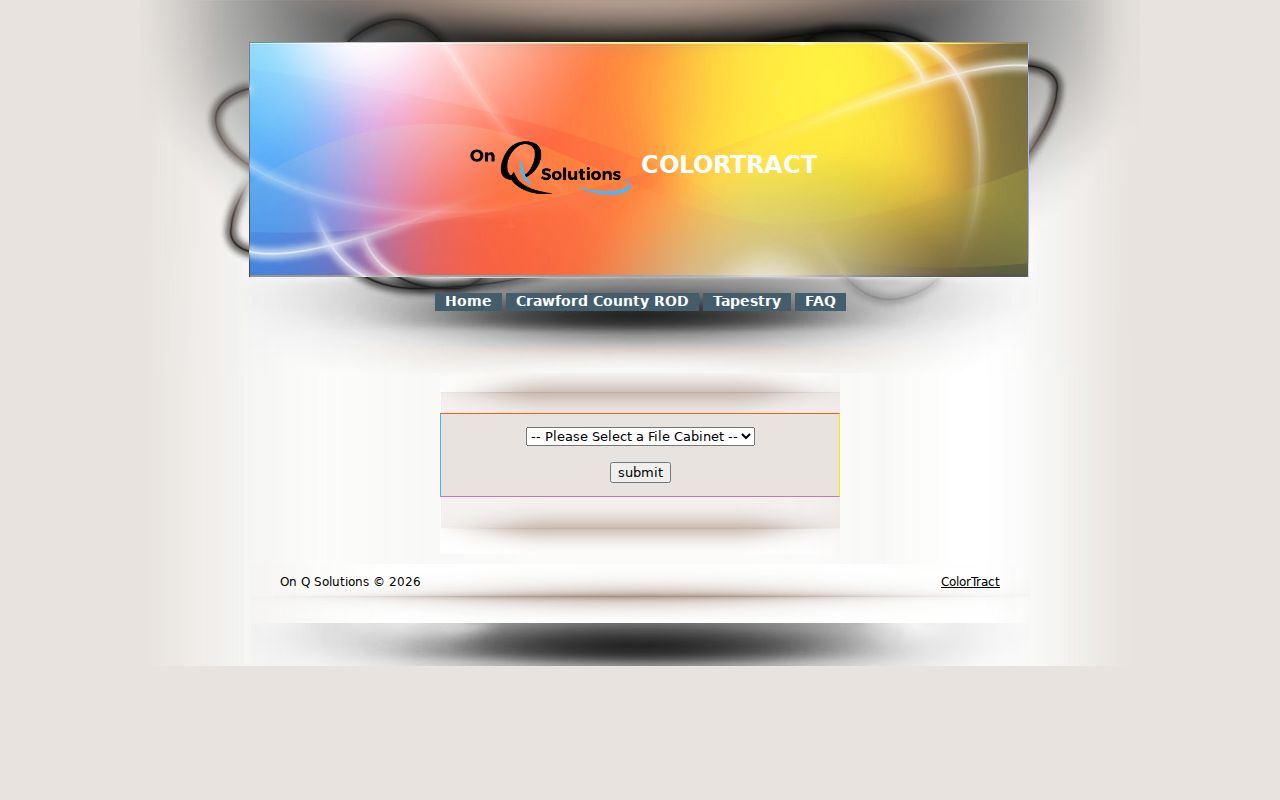
Take a likely hit and use it to find the next deed reference. Then compare that deed's legal description to the same parcel.
Open Crawford County Deed Images
When an index entry looks like a match, open the recorded image. Read it for grantor, grantee, date, instrument type, and land description. Tapestry EON is the county-linked image and search service, with book-and-page search included. Laredo Anywhere is a contracted monthly service aimed at regular title-company and attorney use. Account requirements and image costs are not published. So ask the service or the office before ordering. The image is the source for the instrument text. A party index alone may not resolve a spelling or parcel mismatch.
After reading the deed, search one step backward using the grantor name and the land description.
Why Crawford County’s 2001 Cutover Is Not a Cutoff
Optical imaging began in June 2001, according to the Register of Deeds. Digital recording dates from that year forward. Earlier paper documents have been scanned, and the historical index keeps growing. The 1970s-and-farther statement is a coverage clue, not an exact oldest year. Keep that distinction in mind. A scanned image can exist even when a current name query misses it.
If the chain stops online, ask about the tract index. Ask also about bound deed books, historic index cards, and microfilm. Bring the parcel description and the last deed reference you found. That helps the office point you to the right era.
Older Crawford County Land Descriptions
Prairie du Chien's oldest mapped land includes French private claims, later lot-and-block plats, and Public Land Survey System descriptions. The Wisconsin Historical Society catalogs an 1828 private-claims plat, an 1853 Main Village plat, 1854 and 1856 Prairie du Chien maps, a Wauzeeka map, and 1901–1902 atlas sheets. A historic atlas earns its keep when a current address search fails or an old deed names a lot rather than a modern parcel. These images explain a historical reference or a changed street pattern. They do not replace the deed that conveyed the land. Keep the map era and its limits attached to any clue it gives you.
Probate and Death Transfers in a Crawford Chain
A straight owner-to-owner deed chain can pause at an estate. Crawford County Register in Probate files may hold an inventory. They may also hold a will, personal representative authority, or a judgment of descent. The Register of Deeds also records TOD-110 and HT-110 forms. The HT-110 directions call for supporting deed and tax materials. A certified death certificate may be required. That applies when the death occurred outside the county or state.
Match the decedent's exact name across both probate and land records. Check the parcel, legal description, and date too. A death certificate supports a transfer. It is not itself the deed. Probate access and redactions depend on the file and court rules.
Ask for Older Crawford County Index Material
The Register of Deeds sits at 225 N Beaumont Road, Suite 220, in Prairie du Chien. The office answers (608) 326-0219. When you call or visit, ask how the older Crawford County deed records are indexed. The index may live in scanned paper records. It may instead be a bound book, a tract card, or microfilm. Bring details that narrow the hunt: the current parcel, the legal description, the last known owner of record, and the latest instrument reference. Staff at the counter can explain access and copy options. They cannot offer a title opinion.
A Wisconsin Public Records Law request is another path. Describe the specific record and the year range you want. The county notes that requests generally may be oral. Putting a complex search in writing works better. Before you ask for a broad span of deed records, ask whether a locating or copy charge applies.
How Far Crawford County Ownership Records Reach
How deep do Crawford County ownership records reach? The online deed index is described as going back as far as the 1970s and farther. Yet the county publishes no firm first year. The 2001 imaging start marks a digital-recording transition, not the oldest deed. Scanning and historical indexing continue. No source reports a courthouse fire or a destroyed decade. So never explain a gap in a deed chain as a loss event without further evidence.
House history and due diligence. Use former-owner records to understand a property’s history or verify a land transfer. Do not use names or addresses to track, threaten, or harass a living person.
Carry the Legal Description Back Through Older Records
Every backward step must keep the same land identity. Once you find a deed, record the whole description. Include lot and block, section-township-range references, parcel clues, the instrument date, and the book/page or recording number. Search the named grantor as an earlier grantee. Then compare the next deed's description instead of trusting a matching name. When a chain runs through several parcels or a family transfer, use the recorded plat or a certified survey map to track how the land was divided.
Crawford County reports optical imaging began in June 2001. Earlier paper has been scanned. Historical indexing continues. The published description says indexing reaches as far back as the 1970s and farther, with no exact first year given. That means an older deed can sit in the system as an image yet stay hidden from a straightforward name query. When an online chain stops, ask the Register of Deeds about older index books, tract cards, microfilm, or office-assisted searching of the property records.
Estates change names in a chain. If a prior owner received land through probate, pair the Register in Probate with the deed record. Inventories, wills, and judgments of descent explain why a name differs from the next grantee. They never replace the conveying deed. Transfer-on-death instruments and survivorship filings also pass title without a conventional sale deed, so name those types when asking the Register of Deeds about a break.
Historic maps earn their keep when a description leans on an old lot, road, or settlement name. Prairie du Chien's private-claim and village plats help orient the record. An atlas proves no present title. Keep a working list. Log every source, date, and unresolved break. A specific request gets more from the office. It also stops the chain from jumping silently between two similarly named owners or parcels in the Crawford County property records.